The El-Tor Pumped Storage Power Project integrates a massive 15 GW Solar and 8 GW pump-turbines installed capacity with a 185 million m³ Energy Storage water battery to secure high reliable power to supply the grid.
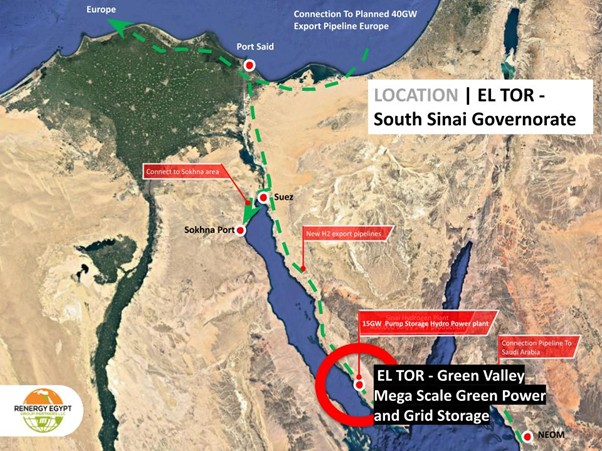
El-Tor project location in South Sinai
Located in the South of Sinai near El-Tor and Sharm El-Sheikh, El-Tor Green Valley brings together a unique combination of natural resources to create one of the largest and most cost-competitive pumped storage hydropower projects in the world. The project will provide Egypt with competitive, locally produced green baseload power, large-scale grid storage, instant power response, and blackout recovery — reducing Egypt’s dependence on LNG imports and gas-fired power generation.
Project phase 1, with an estimated 7.5 billion USD investment for the first phase of 1.55 GW and 125 GWh energy storage is at pre-feed stage, the pre-feasibility is finished, all EISA studies submitted on April 2026 and the start of the building is scheduled to start end of 2028 and operational in 2032/33 with an estimated 5 year building time, one of Egypt’s largest civil projects.
To unlock the next project development phase, we are working on the PPA framework with the Minister Of Electricity, aiming to sign in December 2026.
In October 2026 the El-Tor project was selected by the EU T-MED support program.
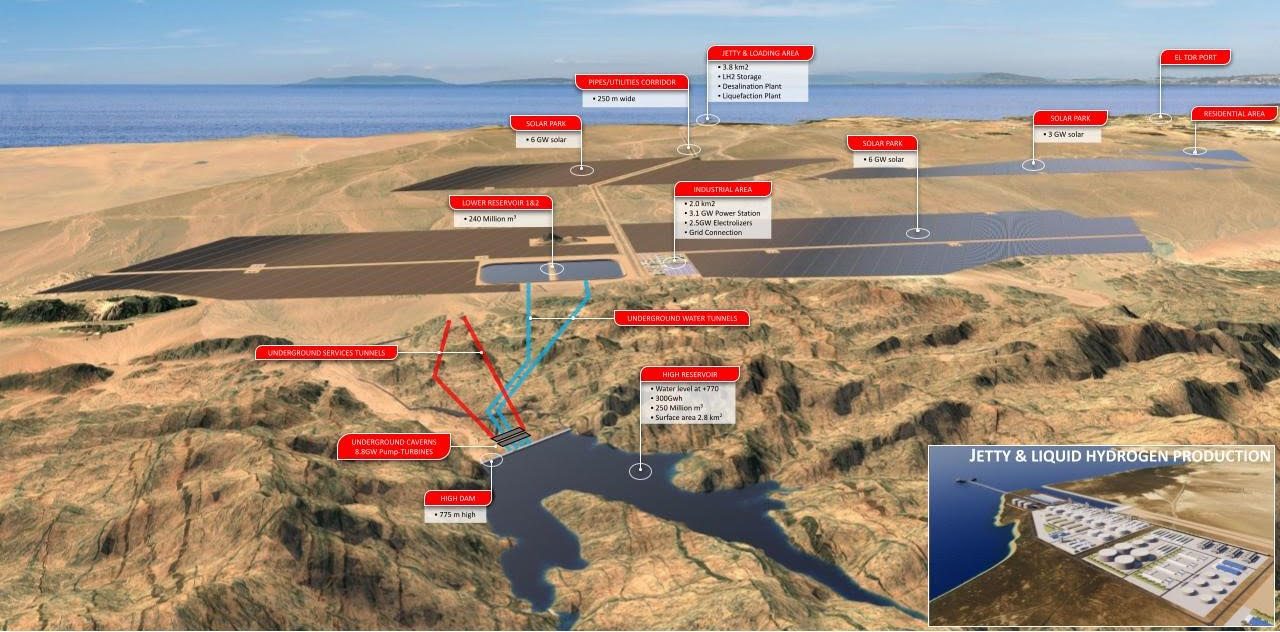
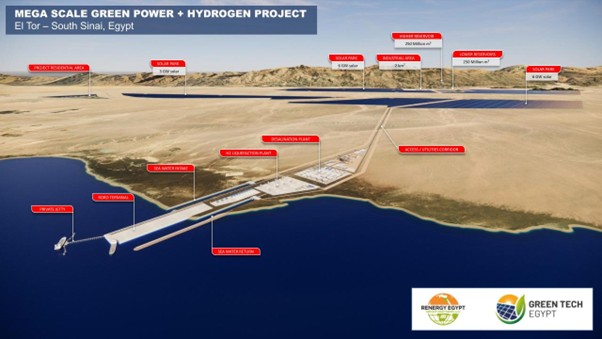
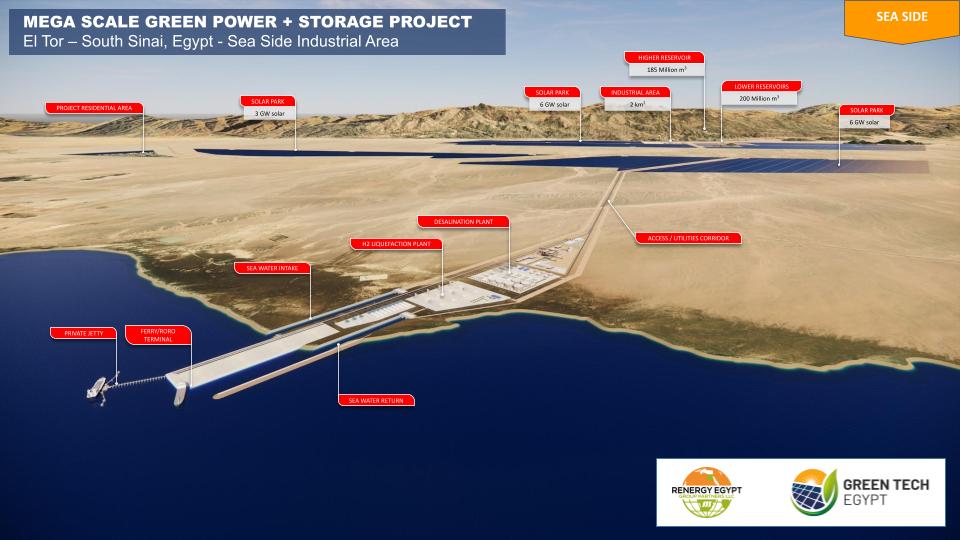
El-Tor Green Valley site concept. Current design capacities are stated in the project figures above.
Project at a glance
El-Tor Green Valley Power Plant can deliver up to 27 TWh of electricity per year in the two phases — approximately 10% of Egypt’s total projected electricity demand by 2030, and nearly 3X the output of the Aswan Dam. Total foreign investment is estimated at 15 billion USD, with up to 30% local content and a project lifetime of 50 years.
The El-Tor Pumped Storage Hydro Power plant enables closing down the old inefficient gas power plants one-on-one from day one, without any investment in grid management or storage, with massive state-budget savings on electricity production costs, and LNG import savings.
Phase 1
1.55 GW
125 GWh storage · 13.5 TWh per year
The project will be developed in two phases, aligned with offtake demand. Phase 1, 1.55 GW baseload power with a yearly production of 13.5 TWh and up to 125 GWh storage, is fully dedicated to supplying power, energy storage and grid services to the Ministry of Electricity and EETC, securing the Egyptian long term renewable energy demand for 50 years and creates a bankable first phase by a long term PPA with EETC.
Phase 2
1.55 GW
125 GWh storage · 13.5 TWh per year
Phase 2, the next phase 1.55 GW baseload power, with a yearly production of another 13.5 TWh per year, with up to an additional 125 GWh storage, is exclusively reserved for the EETC. The total yearly production at phase 2 is 27 TWh per year with a baseload power output of 3.1 GW with a storage capacity of 250 GWh.
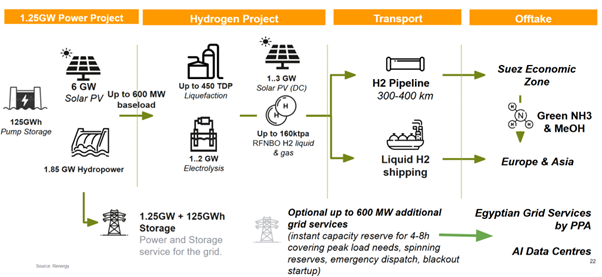
The El-Tor green baseload power plant also unlocks all requirements for the production of cheap green fuels for export and local green industries, like hydrogen, liquid hydrogen and green ammonia. The El-Tor Green Valley enables the new industries with industrial land, jetty, RoRo, cooling water and green power.
Key benefits for Egypt
15 billion USD in foreign investment in two phases
Up to 30% local content - massive civil project
DBOOT project with 50-year project lifetime
Up to 27 TWh yearly production, 10% of Egypt’s electricity needs met with green baseload power
Direct savings on the state budget on electricity production of 1.35 billion USD per year compared to gas power plants running on LNG
LNG import saving of 195 million MMBtu per year, about 30% of the total LNG import, with a value of about 2.5 billion USD per year
A new industry with tens of thousands of jobs during construction; thousands of permanent operational jobs
Long-term competitive energy price security through locally produced electricity for 50 years
Up to 250 GWh large-scale grid storage — equivalent to 50,000 battery containers of 5 MWh each
Major development contribution to South Sinai, aligned with the vision of President Sisi
Foundation for future green fuel industries including AI data-centers, green fuel production
Location and land allocation
An exceptional site where coastal exposure along the Red Sea, available land, high solar irradiation levels, and high mountains with favorable granite topography converge to offer an unmatched renewable energy development opportunity.
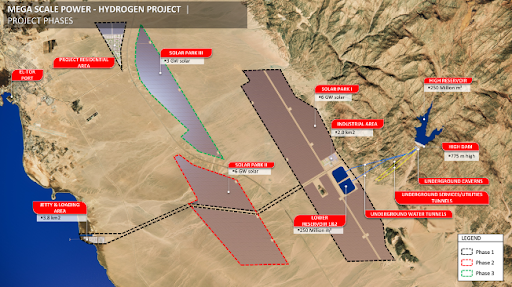
After two years of coordination between all stakeholders, Renergy and The National Center For Planning Stateland Uses (NCPSLU), finalized the land allocation for the 2 project phases. The total project area is about 125 km².
The main project areas are:
Hydropower dam – 175 m high in the Mountains for 185 million m³ water
Underground tunnels with up to 8 GW pump-turbines
Two Lower Reservoirs up to 185 mil m³
Solar plant up to 15 GW
Industrial Area – Power Distribution
Sea-site industrial Area with Jetty and RoRo
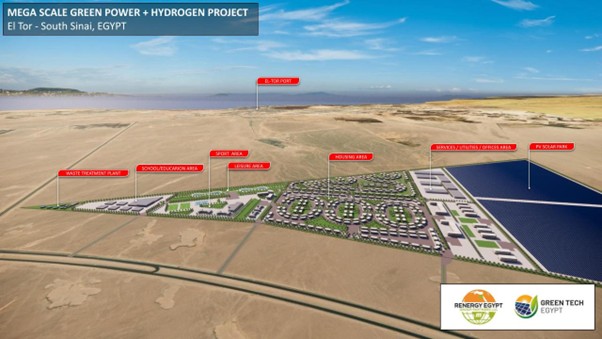
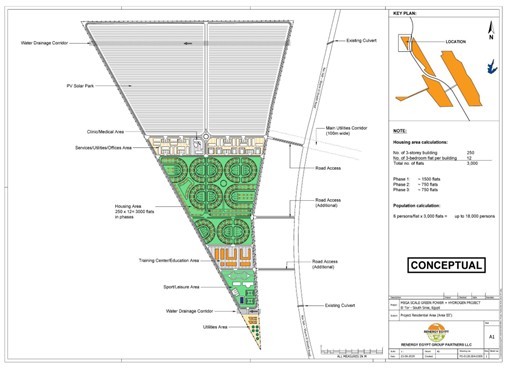
Residential Area for the workers with about 1,500 apartments
270 km 500 kV high voltage line to O-Moussa
70 million m³ per year capacity desalination water plant
El-Tor project map
How pumped storage works
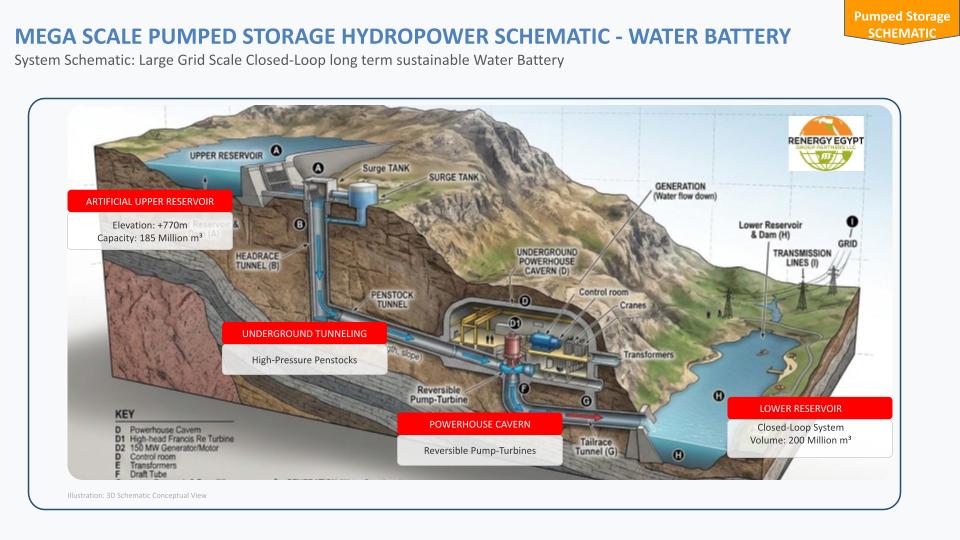
Pumped Storage is one of the most cost effective ways to store grid scale energy, below the schematic overview of the Pumped Storage Hydro Power project.
The fresh water, agriculture water made by the project desalination plant, will be pumped up from the lower to the higher reservoir, by the Solar energy during the day. During the night, when the sun is down, the water flows from the higher reservoir to the lower reservoir to produce electricity by the (Pump)Generators. So the project is a full closed loop water system, a huge water battery, managing up to 13 GW solar power on the day and 8 GW of pump turbines by the local minigrid, producing green renewable energy 24 hours per day.
To give you an idea, the El-Tor project can store up to 250 GWh, can run 3.1 GW for 80 hours backup, this is equivalent to 50,000 battery / BESS containers of 5 MWh.
Solar generationRenewable power during the day
PumpingWater moves to the upper reservoir
Water storageEnergy stored behind the dam
GenerationWater returns through pump-turbines
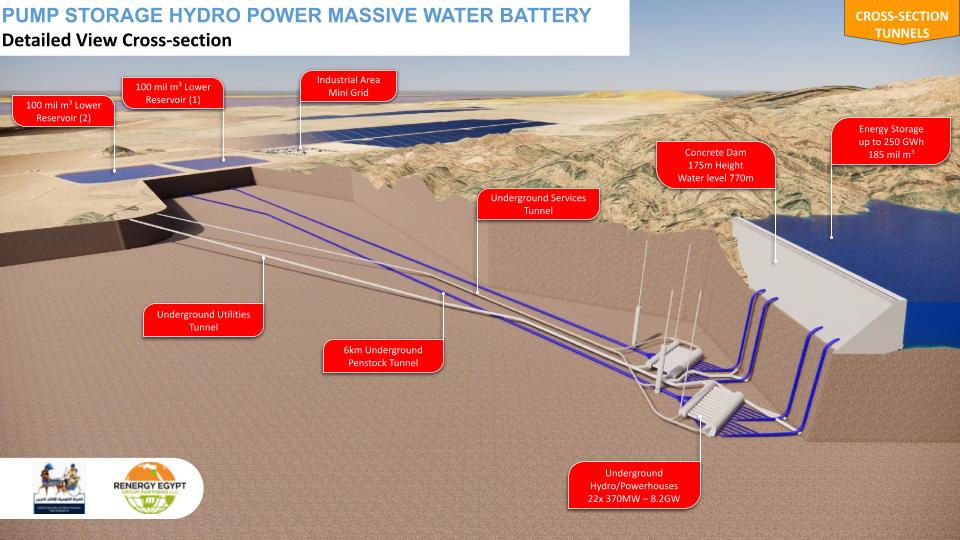
Pumped-storage hydropower schematic — water battery. Open the diagram for a larger view.Detailed cross-section of the pumped-storage water battery. Open the diagram for a larger view.
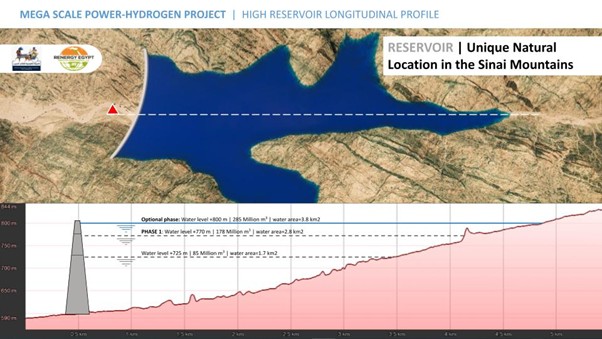
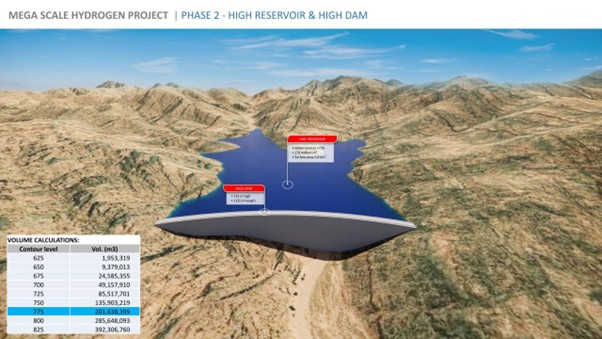
The higher reservoir is located 800 metres high in the mountain, storing 185 million m³ behind the dam. The two lower reservoirs of 100 million m³ each, will be built in two phases.
The dam will be a massive civil project on its own, between 175 meters high, and about 1 km wide with an estimated 7 million m³ of concrete.
The natural shape of the mountain enables the building of an efficient dam, storing huge amount of water behind it
The higher reservoir and lower reservoir are connected by four 10-metre diameter underground tunnels of about 6 km long, 500 below the surface.
The tunnels can handle flow over 2,000 m³ per second divided over a network of sub-tunnels and 22 pump-turbines of 370 MW, total 8.1 GW pump-turbine capacity.
Upper-reservoir location and elevation profileConcept view of the upper reservoir and dam
Power supply and grid storage
Phase 1 targets 1.55 GW of green baseload power and up to 125 GWh of grid storage. It is designed to deliver a stable 1.55 GW, handle daytime peak loads up to 7 GW and shift 25 GWh in the daily cycle. The water head between the lower and upper reservoirs moves between 460 and 495 metres.
The full project can deliver 3.1 GW baseload power to the grid, with up to 250 GWh storage, and will handle almost 14 GW peakload during the day, shifting a massive 50 GWh per daily cycle. The water head between lower and higher reservoirs is in the range of 465 to 520 metres.
Power and storage by project stage
Performance
Phase 1
Full project
Baseload power
1.55 GW
3.1 GW
Grid storage
Up to 125 GWh
Up to 250 GWh
Annual electricity production
13.5 TWh
27 TWh
Daytime peak load managed by project mini-grid
Up to 7 GW
Almost 14 GW
Daily energy shift
25 GWh
50 GWh
Water head
460–495 m
465–520 m
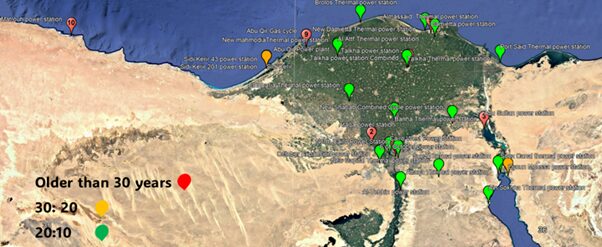
The El-Tor project can deliver green baseload power and grid services to support the Egyptian power grid, substitute old LNG gas Power plants, or add baseload power to the huge increase of demand of 30% by 2030, minimal baseload on the Egyptian grid will increase from about 20GW now to an estimated 26GW by 2030.
Below an overview from all gas power plants, red and orange are potential old and inefficient power plants, a total of about 16 locations.
Existing power-generation locations considered in the project study
Grid connection
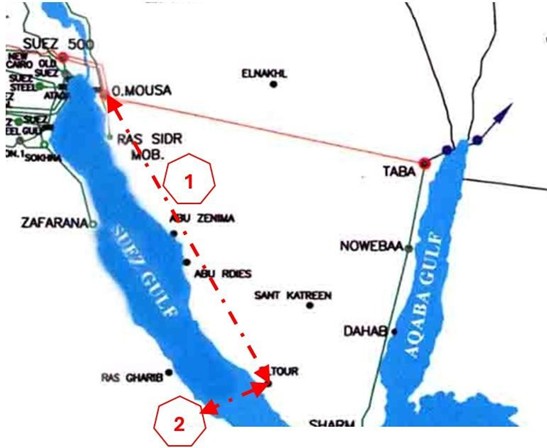
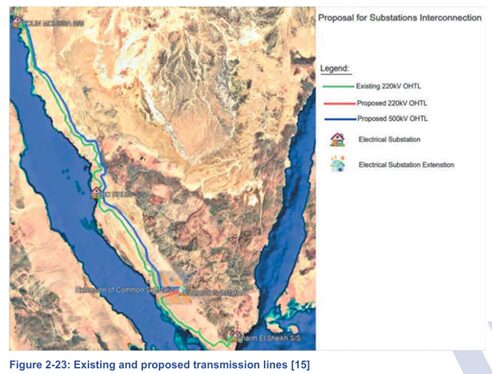
The El-Tor project will be connected by a new 500 kV high voltage overhead line to O-Mousa, route 1. The new line will be mainly going parallel to the existing old 220 kV powerline. The feasibility study and routing are done by Madkour and preliminary approved by EETC.
The O-Mousa substation is one of the biggest, main substations of Egypt, also connecting Jordan.
The full EISA study over the full 275 km is also finished, and part of the submission to EEAA. There is an optional alternative to connect the El-Tor to the other projects at Sohna by route 2, through the Red Sea.
The new grid 500 kV connection route is designed by the blue line, mainly parallel to the old current 220 kV line.
El-Tor and O-Mousa grid-connection routeExisting and proposed transmission lines
Sea-site infrastructure
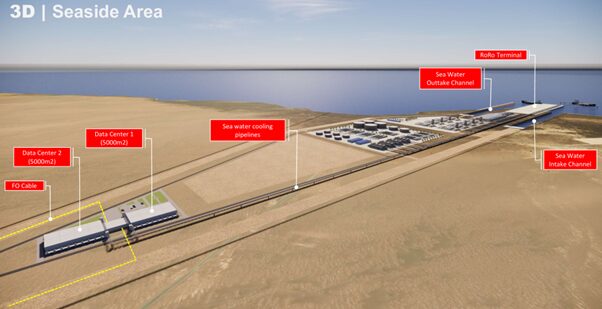
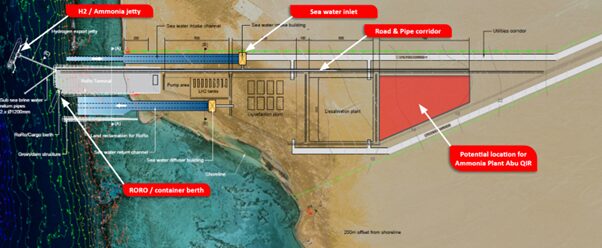
The Sea-Site Industrial Area, about 5 km², is an important area for the project to develop efficiently, with a RoRO to handle all materials and equipment needed.
Next to the RoRo the industrial area facilitates a massive very efficient desalination plant, to produce the fresh water (agriculture water) for the Pumped Storage, a total of 185 million m³ in 2-3 years.
The capacity of the state of the art desalination plant is 70 million m³ per year, producing 1m³ of water with less than 1.5kWh of electricity.
The El-Tor Green Valley project has all facilities to accommodate the next step project in renewable fuel, like hydrogen, liquid hydrogen, ammonia, fertilisers plants.
Sea-site industrial area and project-delivery facilitiesSea-site and jetty concept viewIndustrial-area infrastructure plan
Residential facilities
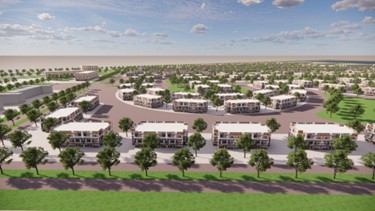
A full residential area has been designed for the needs of many thousands of workers, staying at El-Tor, fully compliant with all international standards. The residential area will have all needed accommodation for the workers and people, like schools, hospital, sport facilities and nearby the city El-Tor.
The new residential area for the workers is near to the city of El-Tor, built to stay.
Planned residential area for project workersResidential area in the wider project layoutConcept layout
Environmental and social assessment
The EISA study was finished in March 2026, after more than two years of hard work, the Renergy team submitted one of the biggest EISA studies ever done in Egypt at the EEAA. The study was divided into 9 substudies, and was over 5,000 pages.
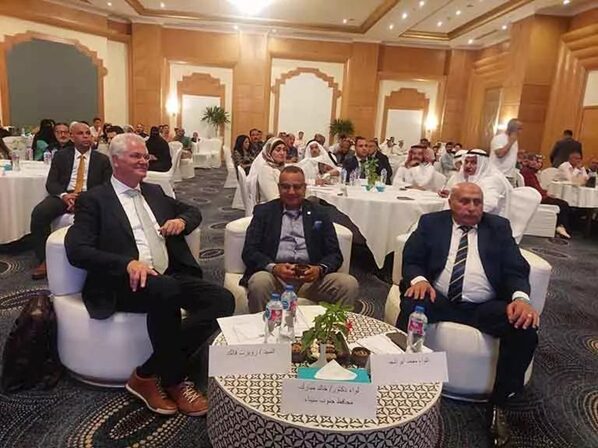
An important part of the EISA study was the public consultation, the last one held in August 2025 at Sharm El Sheik, with many people attending, supporting the project.
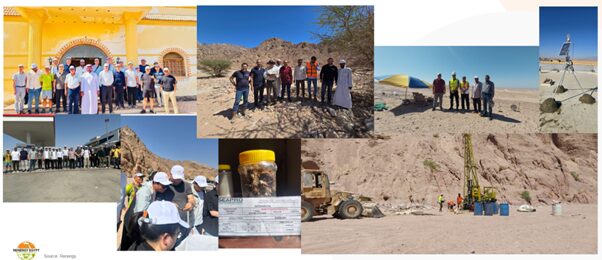
The new El-Tor office of Renergy was supporting the many people who were doing all the studies the last two years as part of the feasibility study.
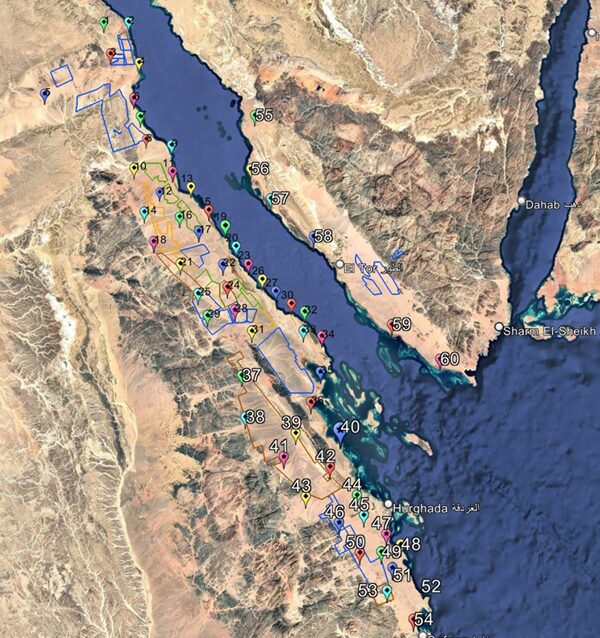
Renergy has shared all the EISA studies with NREA for free, to join all study results of the full Red-Sea area on two sides.
Public consultation for the El-Tor projectFieldwork and technical studies for the projectProject and environmental-study area in South Sinai
Future green fuels
After phase 1 with power and storage only, depending on the market development, offtake and bankability, the project can deliver a full range of renewable energy fuels,and derivatives like hydrogen gas, liquid hydrogen, ammonia, (e)methanol, fertilisers.
The EISA has all permits to handle and produce these new green fuels. Also the Sea-Site has all the facilities with our own RoRo and Jetty, cooling water permits.
Project flow from renewable electricity to green hydrogen and its usesEl-Tor sea-site industrial area and jetty concept
Government coordination
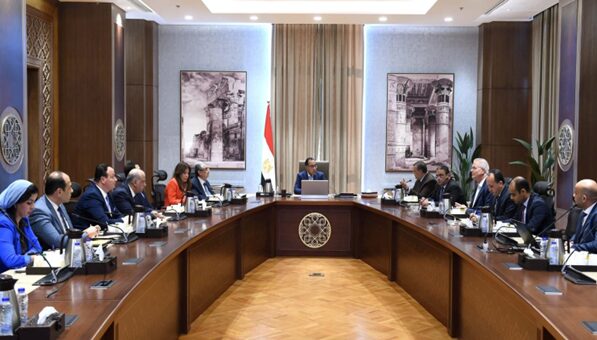
The El-Tor project has the full support of the PM cabinet, and from the Prime Minister. The project was presented in November 2023.
Renergy and partners finished a joint study with the Ministry Of Electricity And Renewable Energy, EETC and EEHC to find the best solution, how the El-Tor project can provide the Egyptian grid with the best load profile by baseload power and large scale grid storage, according to the demand profile, considering the new signed solar and wind PPA’s, with the long term vision on the energy demand in Egypt.
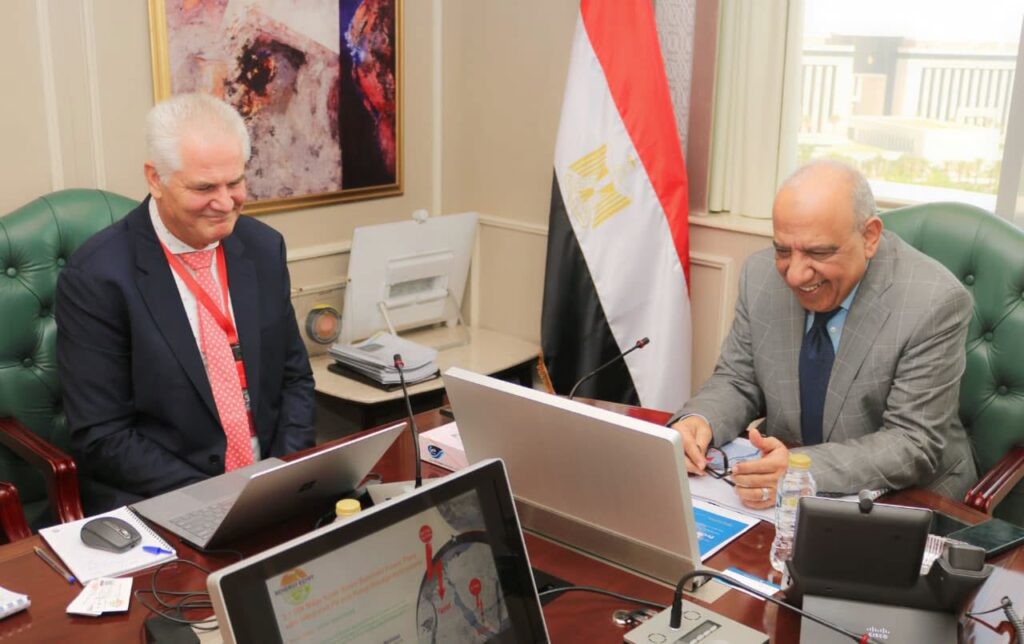
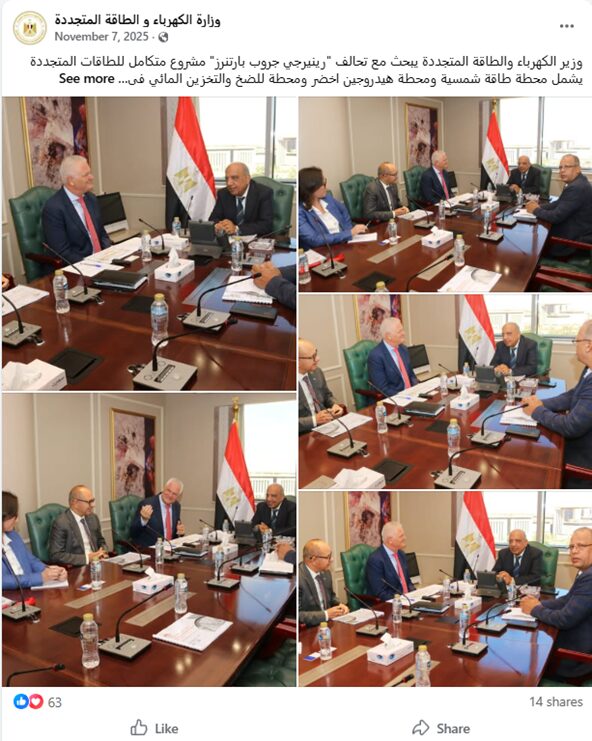
Government coordination meeting for the El-Tor projectMeeting with H.E. Dr Mahmoud, Minister of Electricity and Renewable Energy — August 2026
Project coordination and stakeholder meetings
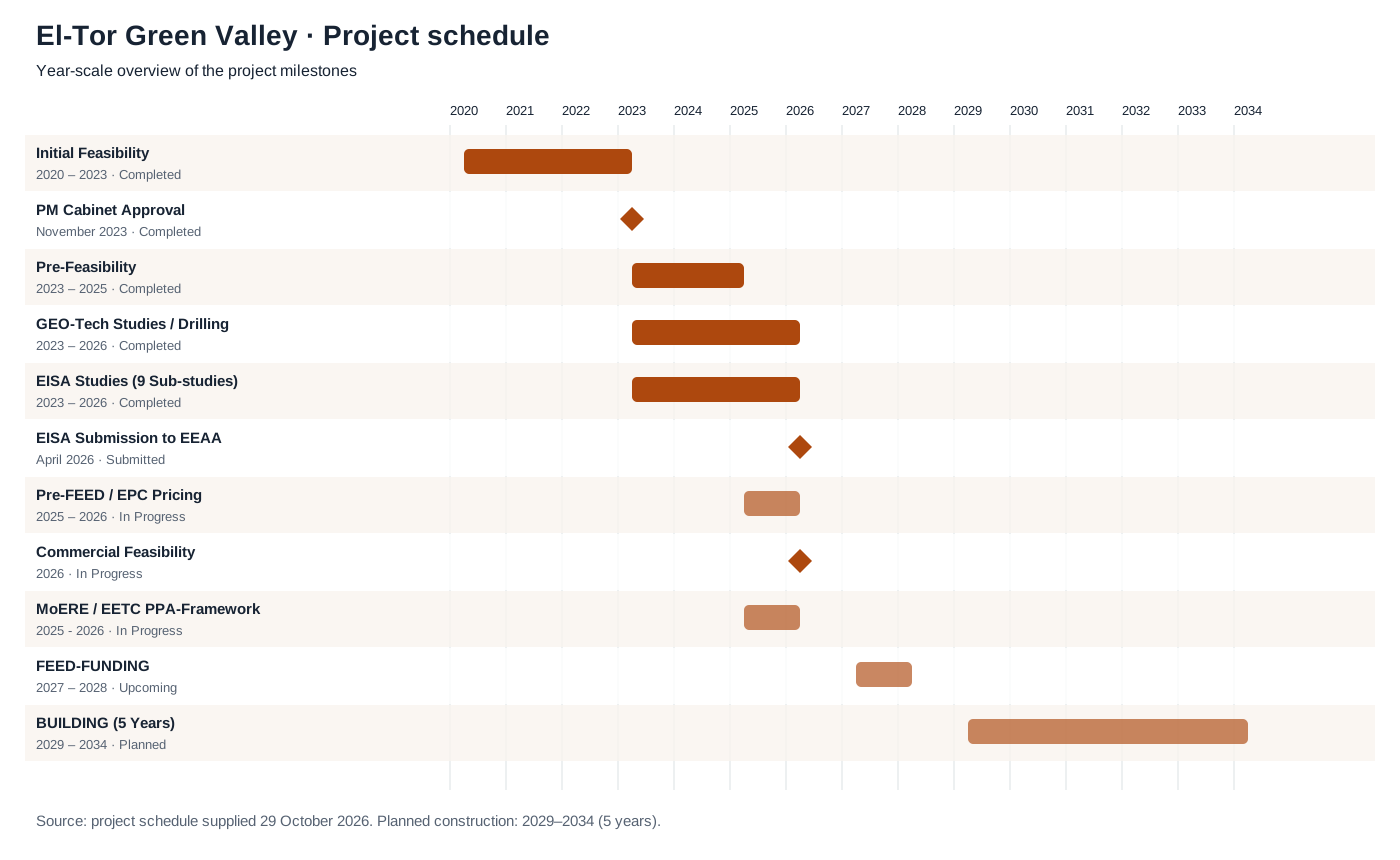
Project schedule
Below the summary of the project schedule, aiming to start building at the end of 2028.
Project schedule and milestones
Phase / Milestone
Timeline
Status
Initial Feasibility
2020 – 2023
Completed
PM Cabinet Approval
November 2023
Completed
Pre-Feasibility
2023 – 2025
Completed
GEO-Tech Studies / Drilling
2023 – 2026
Completed
EISA Studies (9 Sub-studies)
2023 – 2026
Completed
EISA Submission to EEAA
April 2026
Submitted
Pre-FEED / EPC Pricing
2025 – 2026
In Progress
Commercial Feasibility
2026
In Progress
MoERE / EETC PPA-Framework
2025 - 2026
In Progress
FEED-FUNDING
2027 – 2028
Upcoming
BUILDING (5 Years)
2029 – 2034
Planned
View the project schedule diagramEl-Tor Green Valley project schedule, 2020–2034. The diagram follows the milestone table above.
Advisory Board
Mr. Diederik Samsom
Former Member of Parliament and Leader of the Dutch Labour Party
Principal architect of the EU Green Deal & RePowerEU
Expert on EU H2 policy, regulations & financing
Prof. Dr. Ad van Wijk
Professor 'Future Energy Systems' at Delft University of Technology
Advisory Board, Dii Desert Energy
Leading expert on H2 transition
Key role in shaping EU H2 policy
Mr Robert Valk
CEO And Founder Of Green Tech Egypt & Renergy Group Partners
35 yrs+ experience as a business leader
Expert in renewable-energy project development
Investor and sponsor of large-scale sustainable-energy projects
Mr. Diego Vilanova
42+ years in large-scale hydropower with Neyrpic, Alstom, GE and Andritz
Senior executive with global large-scale project and market-leadership experience
Mr. Talal Al Zain
CEO, Middle East & North Africa, Co-Head Alternative Investments at PineBridge Investments
Leading expert in Middle East funding and investment
Dr Mostafa Madkour
Founder and Chairman of the Madkour Company—a leading Grid/Utility solutions company
37+ years of business experience
Ph.D. in 'Electrical Power & Machines' from RPI USA, & Cairo University
Prof. Dr. Ahmed Gaber
Founder and Chairman, Chemonics Consultancy Company
Emeritus Professor, Department of Chemical Engineering, Cairo University
Our partners
CEEC - CGGCMadkourAndritz HydroMaatouk Bassiouny & HennawyFugroILF Consulting EngineersEcoConServWalter TostoChart IndustriesTAQA ArabiaJiangsu Power Design Institute (JSPDI / CEEC)
Contact
Partnering to deliver the next generation of renewable infrastructure.