
A new green hydrogen industry on the Red Sea
Green Tech Egypt and its subsidiary Renergy are developing a modular hydrogen-production platform, connecting renewable baseload power at El-Tor with future green-fuel markets in Europe.
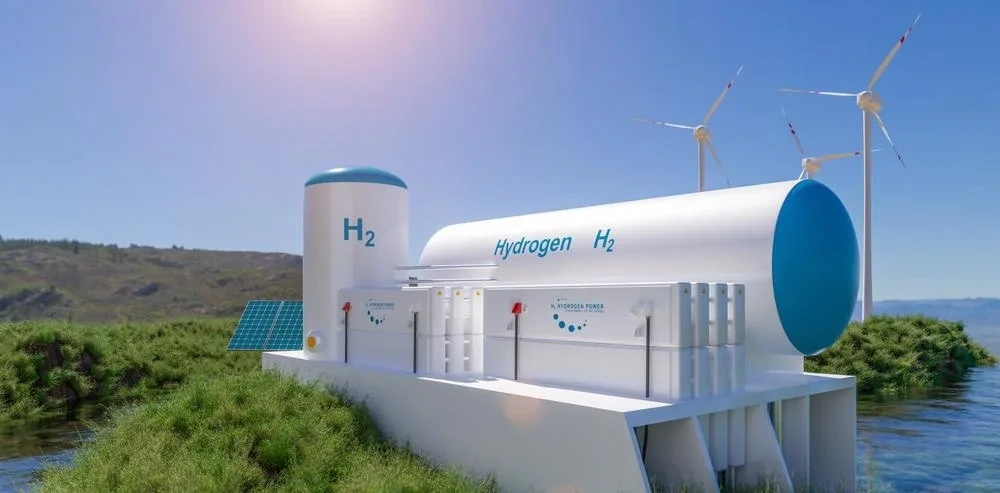
- ≥ 20%target reduction in levelised hydrogen production cost (LCOH)
- 20 MWmodular production cells, added as demand grows
- RFNBOcertified renewable electricity and hydrogen
- 5 daysplanned door-to-door distribution route to Europe
- €6–7 / kgtarget price for liquid hydrogen delivered at Trieste
Modular, scalable production, targeting hydrogen at least 20% cheaper.
Green Tech Egypt initiated the modular, scalable production design with European partners, ILF Consultants and Chinese partners. The design targets a levelised cost of hydrogen (LCOH₂) at least 20% below other hydrogen projects worldwide, with the ambition of making El-Tor a leading site for low-cost production.
The RFNBO-certified renewable electricity from El-Tor unlocks green-fuel production and new industrial opportunities in Egypt.
Green baseload power is the foundation
The El-Tor Green Valley programme combines solar generation and pumped-storage hydropower to provide RFNBO-certified green baseload electricity and large-scale energy storage. The figures below describe the full programme, which provides the renewable platform for future hydrogen production.
- 15 GW
- solar PV in the full El-Tor programme
- 8 GW
- pumping capacity
- 250 GWh
- energy storage
- 20 MW
- modular production cells
- RFNBO
- certified renewable electricity and hydrogen
- Phased growth
- new cells added in line with bankable offtake
- Pipeline
- from the cells to the seaside industrial area
- Gas or liquid H₂
- compression or liquefaction, followed by storage in hydrogen containers or a carrier ship for export
- European heavy transport
- Aviation and shipping
- Industry and green-fuel derivatives
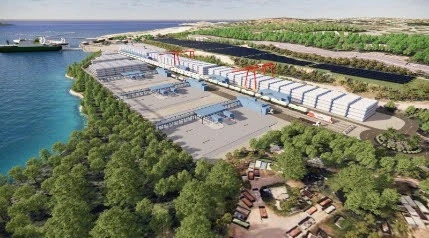
A seaside industrial area at El-Tor
The planned seaside industrial area includes desalination, project-delivery infrastructure and its own RoRo and jetty facilities.
The planned industrial area at the El-Tor sea-site includes desalination, project-delivery infrastructure and its own roll-on/roll-off (RoRo) and jetty facilities. The wider programme is designed to accommodate future renewable-fuel facilities, supported by the required permits and approvals and RFNBO certification.
The initial phase of the wider project focuses on renewable power and energy storage. Future green-fuel production depends on market development, bankable offtake agreements and financing.
Explore the El-Tor pumped-storage project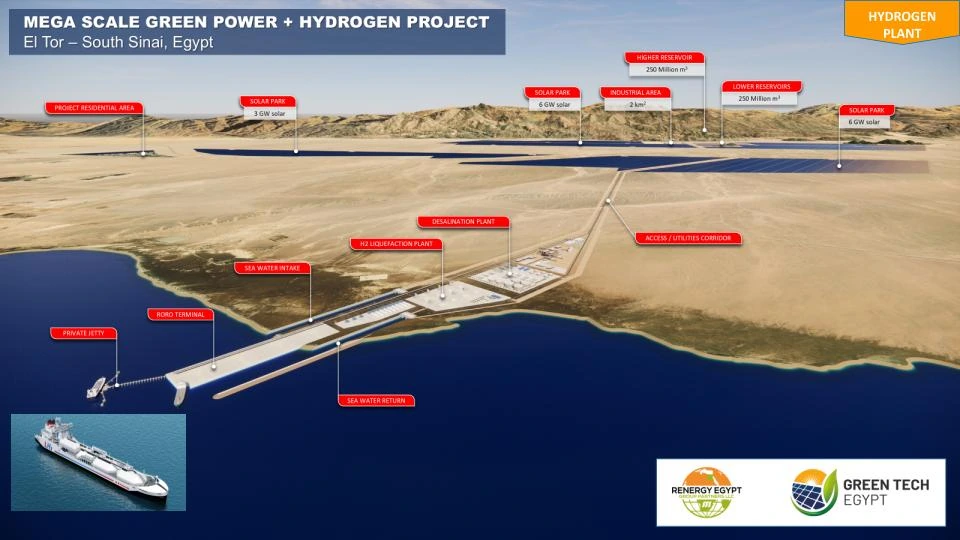
A modular design for competitive hydrogen production
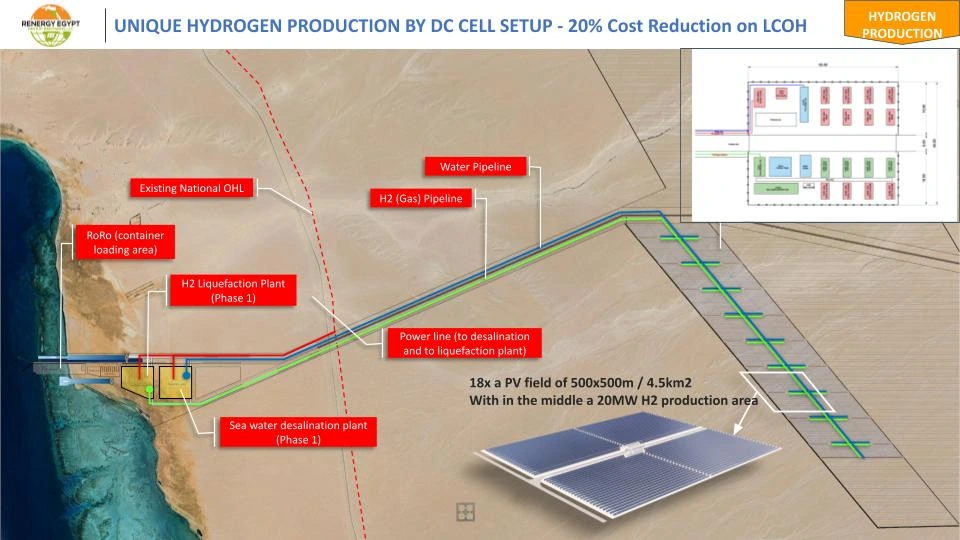
The design targets a levelised cost of hydrogen (LCOH₂) at least 20% below other hydrogen projects worldwide, with the ambition of making El-Tor a leading site for low-cost production.
Modular 20 MW cells
- Designed for straightforward control, low operating risk and rapid scale-up.
- Repeatable 20 MW cells are added in line with offtake demand, without repeating central infrastructure investments for each expansion.
- The RFNBO-certified modular setup supports phased financing.
From cell to export
Hydrogen gas from the cells travels by pipeline to the seaside industrial area, where it leaves in one of two forms:
Liquefaction needs reliable green baseload power 24/7, because the process cannot be stopped at these low temperatures. El-Tor's pumped-storage hydropower supplies exactly that.
Liquid hydrogen for Europe's heavy transport
The export strategy focuses on European heavy-duty transport, aviation and shipping, including demand associated with Europe’s 2030 green-fuel requirements. These long-distance applications face constraints on battery size, weight and the power needed for sustained operation.
The export strategy targets long-distance applications where battery size, weight and power requirements constrain battery-only operation. Liquid hydrogen can be transported in containers or ships, following a logistics approach comparable to the LNG industry.
GreenTech and Italian partner Walter Tosto are developing a door-to-door supply chain from El-Tor through the port of Trieste to truck hydrogen-fuelling stations in Germany.
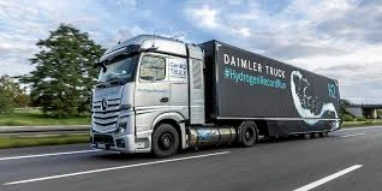
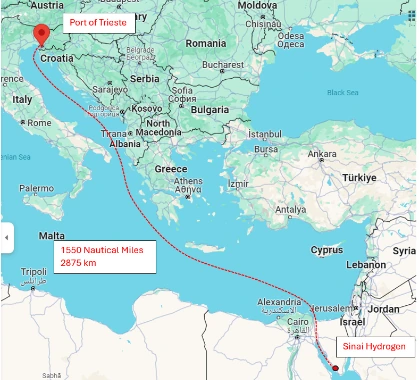
A planned five-day route from Egypt to Europe
El-Tor’s Red Sea location, close to the Suez Canal shipping route, connects the proposed production hub with European markets through Trieste. With Walter Tosto and Seastock, GreenTech has developed a proposed five-day door-to-door route designed to minimise distribution costs.
- Day 0El-Tor, EgyptLiquid hydrogen loaded into 40 ft containers at the seaside industrial area.
- 3–4 days by seaVia Suez to the MediterraneanAbout 1,550 nautical miles. In the first small phase, containers would use the twice-weekly Damietta–Trieste ferry, with a planned 3–4 day crossing.
- ArrivalPort of Trieste, ItalyA gateway to Europe for new green fuels: liquid hydrogen, ammonia and methanol.
- Within 1 day by railGermany, Austria, SwitzerlandThe main markets are less than 1,000 km from Trieste by railway.
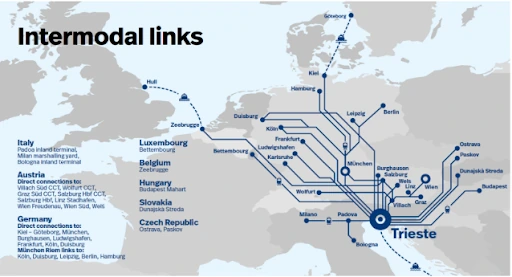
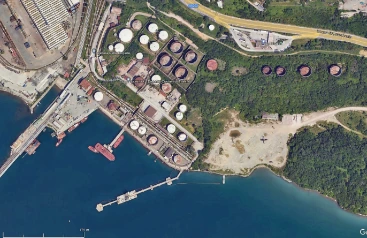
A green fuels hub at the Seastock port in Trieste
The proposed redesign of the Seastock terminal moves from fossil-fuel activities towards green fuels, with hydrogen unloading, storage and onward rail distribution.
Studies complete, offtake in negotiation
GreenTech’s assessment is that hydrogen, combined with the incentives available under the European framework, particularly in Germany, can already compete with diesel in heavy transport without further subsidies. On a mass basis, one kilogram of hydrogen contains about three times the energy of one kilogram of diesel. Bankable offtake and payment guarantees remain key requirements for investment.
- To dateCompleted
All financial and technical studies for El-Tor Green Valley finished by Green Tech and its subsidiary Renergy.
- April 2026Submitted
All environmental and social impact assessment (ESIA) studies submitted.
- October 2026Selected
Project selected by the EU T-MED programme.
- NowIn progress
Working on a bankable offtake agreement with European offtakers for (liquid) hydrogen.
- 2026 / 2027Needed
EU or German state-backed payment protection over 15–25 years is being sought for the first offtake agreements. These guarantees have not yet been secured.
A proposed Green Fuel Import Guarantee
European countries use export-credit guarantees to support exports. GreenTech proposes a comparable Green Fuel Import Guarantee: a European fund would provide payment protection for green-fuel offtake agreements up to a maximum price per kilogram.
Such guarantees are intended to lower funding costs and reduce the delivered hydrogen price. GreenTech’s position is that Europe can recover the cost of the guarantee through lower import prices, while securing and diversifying its long-term energy supply.
A typical project takes four to five years to develop. Delayed guarantees would put green-fuel supply from 2030 at risk. This financing scenario remains subject to bankable guarantees and offtake agreements.
Why GreenTech seeks payment guarantees
- Competitive price. GreenTech’s assessment is that the proposed production price is competitive with other fuels.
- Take-or-pay. The proposed delivery-linked structure leaves production risk with the developer.
- Real demand. Europe needs green energy, fuels and molecules.
- Energy security. Long-term supply should be secured and diversified.
Green Tech is working with the EU and European partners to secure state guarantees for the first projects and phases.
Discuss green hydrogen development
Explore the proposed hydrogen-production development, industrial applications, European offtake and opportunities for cooperation.